Gutter cleaning · 8 min read
How Often Should Melbourne Gutters Be Cleaned? The Answer Changes if You Have These Trees
The 30-second answer
Here’s the straight version.
For many Melbourne homes, inspect gutters at least twice a year and after major wind or storm events. Clean when debris is affecting flow—do not wait for the calendar if gutters overflow. Homes beneath heavy tree cover, with valleys that funnel leaves, or with recurring bird activity may need checks every three months or at key seasonal drops.
See what Apex’s gutter cleaning service includesUse risk, not a generic reminder
A clear roofline in an open estate and a single-storey home beneath mature gums do not need the same schedule. The useful question is not “Has it been six months?” It is “How quickly can this property accumulate enough material to interrupt drainage?”
Start with two planned inspections each year. Shorten the interval if those inspections repeatedly find full channels, blocked outlets or compacted material. Lengthening the interval should be based on evidence from your property—not wishful thinking.
A practical Melbourne schedule
These intervals are inspection guides, not guarantees. A five-minute ground-level check during rain can reveal more than a date in your calendar.
Scroll sideways to see all columns →
| Property conditions | Inspection starting point | What changes it |
|---|---|---|
| Little nearby tree cover | Every 6–12 months | Storm debris, birds or overflow |
| Moderate deciduous or evergreen cover | About every 6 months | Heavy seasonal drop or roof valleys |
| Dense canopy or overhanging branches | About every 3 months | Species, wind exposure and previous blockage rate |
| Known overflow or difficult downpipes | Promptly, then reassess | Cleaning alone may not solve falls, capacity or defects |
| Gutter guard installed | Periodic surface and drainage checks | Guard type, fine debris and roof geometry |
The trees that change the equation
Eucalypts can shed leaves, bark, twigs and seed material beyond a single autumn drop. Plane trees, liquidambars and other deciduous species can load gutters rapidly in autumn. Pines and conifers introduce needles that compact and can pass through or sit on some mesh systems. Flowering trees can add blossoms and fine organic matter at another time of year.
You do not need to identify every species. Watch when the material falls, where wind deposits it and how quickly the outlets disappear beneath it. Your own gutter history is the best maintenance calendar.
Six signs the next clean is due now
Overflow does not always mean debris. Incorrect falls, undersized drainage, failed joints and blocked underground stormwater can look similar. A cleaner should flag visible defects rather than imply that debris removal repairs the system.
- Water spills over the front or behind the gutter during ordinary rain.
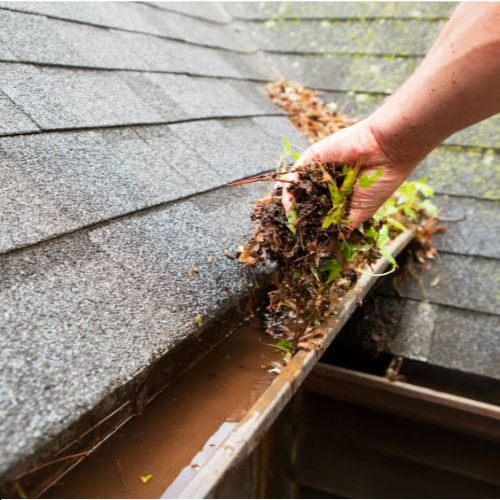
- Plants, moss or compacted material are visible from the ground.
- Birds repeatedly investigate the same gutter or valley.
- Downpipes discharge weakly while neighbouring sections overflow.
- Gutters sag, hold standing water or stain the fascia beneath them.
- It has been through a major wind event and roof debris is visible.
Why DIY becomes a bad bargain
The material in the gutter is rarely the difficult part. Height, ladder placement, brittle roofing, overhead services, uneven ground and the temptation to overreach create the real risk. If safe access is uncertain, do not improvise it.
A professional scope should explain which gutters are accessible, whether downpipe checks are included, what happens to debris, and whether photos or visible findings are provided at handover.
Make the next clean more useful than the last
- Record the date, debris depth and any blocked outlets.
- Note sections that remain wet or overflow first.
- Check whether nearby trimming is appropriate and permitted.
- Ask whether valleys, box gutters or downpipe entries are included.
- Book the next check based on the actual accumulation rate.
Fast answers
Questions Melbourne homeowners ask.
Is cleaning gutters twice a year enough in Melbourne?
It is a reasonable starting point for many homes, but dense tree cover, roof valleys, bird activity and previous overflow can justify more frequent checks.
What is the best time of year to clean gutters?
Time cleaning around your property’s debris cycle and before periods when reliable drainage matters. Many homes benefit from a check after heavy autumn leaf fall and again before or after severe-weather periods.
Do gutter guards mean gutters never need cleaning?
No. Surface debris and fine material still need monitoring, and outlets and drainage paths remain important.
Why do my clean gutters still overflow?
Possible causes include blocked downpipes or stormwater, poor falls, inadequate capacity, damaged sections or unusually intense rain. Cleaning solves debris, not every drainage defect.